 +86-13761919721 / +86-13585804232 /



News
Contact Us
-

+86-13761919721
+86-13585804232 -

celine3489@gmail.com
celine3489@gmail.com
annyagi555@gmail.com
GRPU Low-Pressure vs High-Pressure Pultrusion: Full Breakdown of Core Differences for Glass Fiber Reinforced Polyurethane
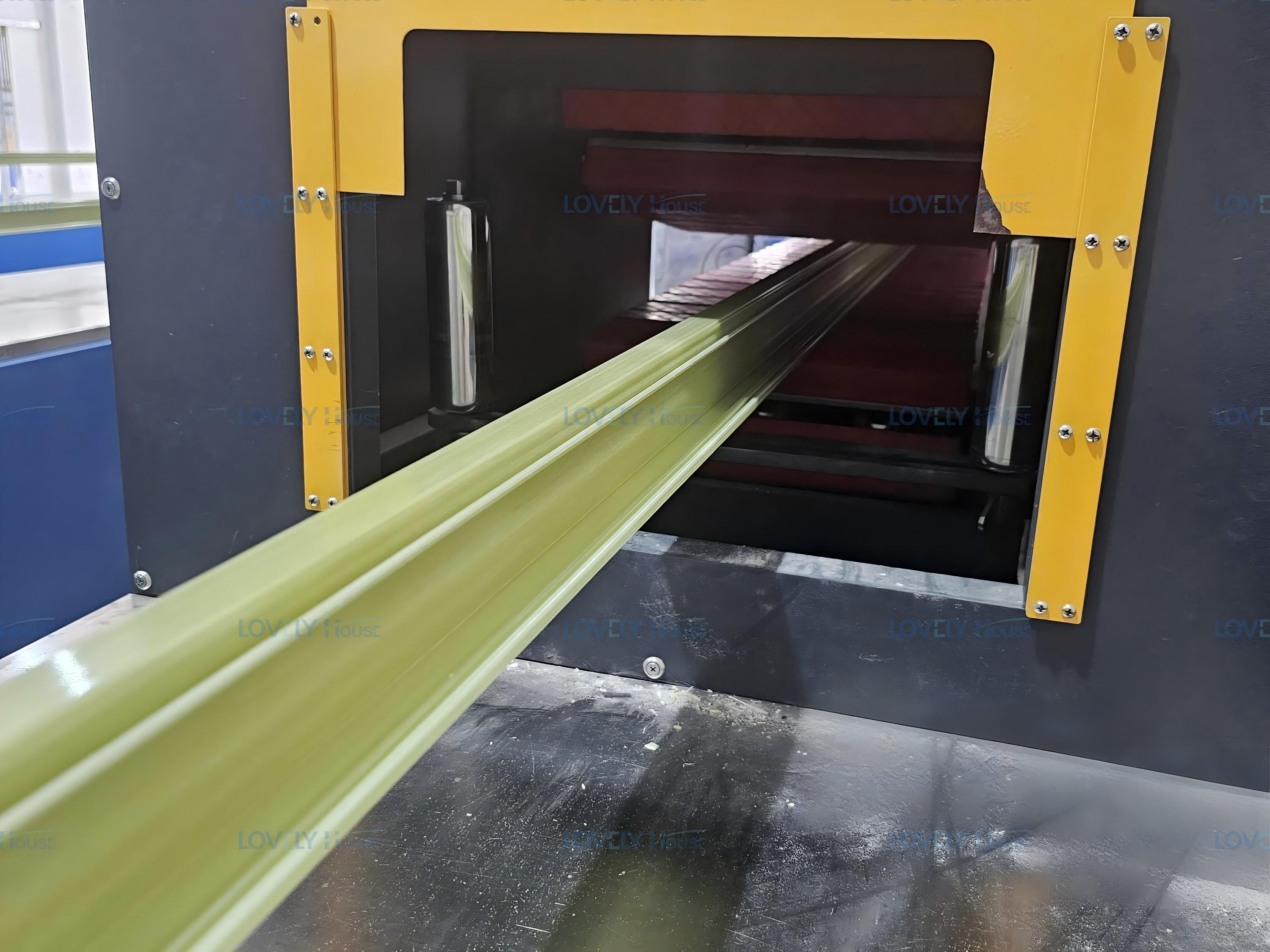
As one of the most widely applied high-performance composite materials in the construction, new energy and rail transit industries, GRPU/FRPU (Glass Fiber Reinforced Polyurethane) relies heavily on pultrusion technology to deliver its excellent mechanical properties. For manufacturers and material engineers, clarifying the gaps between GRPU/FPRU low-pressure pultrusion and high-pressure pultrusion is the key to optimizing production efficiency, reducing costs and stabilizing finished product quality. This guide sorts out all core practical details of the two processes, covering the full dimensions of process logic, production performance, finished part quality and application scenarios.
Basic Background of GRPU/FRPU Pultrusion Technology
GRPU/FRPU uses polyurethane as the matrix resin and continuous glass fiber as the reinforcing phase. The pultrusion process pulls the impregnated fiber bundles through a heated mold for continuous curing and forming. Unlike traditional composite pultrusion processes, GRPU/FRPU has unique requirements for pressure control due to the low viscosity and high reaction activity of polyurethane resin. This is also the core reason why the two technical routes of low-pressure pultrusion and high-pressure pultrusion have been derived in the industry.
4 Core Differences Between GRPU/FRPU Low-Pressure Pultrusion and High-Pressure Pultrusion
1. Molding Pressure Matching and Resin Adaptation
GRPU/FRPU low-pressure pultrusion is a process route developed specifically for the characteristics of polyurethane resin. It does not need to build an ultra-high pressure environment. The low-viscosity polyurethane can fully penetrate every bundle of glass fibers at a pressure far lower than that required for epoxy pultrusion, and complete the pre-curing reaction in the mold. This process has extremely low requirements for mold sealing and equipment pressure resistance, and will not cause premature overflow of polyurethane resin.
GRPU/FPRU high-pressure pultrusion is a technical route extended from the high-viscosity resin pultrusion system. Its original design purpose is to drive high-viscosity resin to infiltrate fiber bundles. For GRPU/FRPU materials, excessive pressure cannot bring additional infiltration benefits. Instead, it will easily break the original stable resin reaction balance, leading to problems such as uneven glue content of the profiles.
2. Production Line Speed and Mass Production Efficiency
The GRPU/FRPU low-pressure pultrusion production line can run stably at a conventional speed of 0.2-1.5m/min. After optimizing the temperature gradient and glue supply system, the modern high-speed GRPU/FRPU pultrusion equipment can even reach a speed of 4-15m/min, realizing fully automated uninterrupted continuous production. The unit hourly output is more than 3 times that of the traditional composite pultrusion line, which is very suitable for large-scale orders of GRPU/FRPU energy-saving door and window profiles, new energy structural parts.
GRPU/FRPU high-pressure pultrusion needs to maintain a stable pressure system during the whole operation process. The traction speed is strictly limited to avoid safety hazards caused by pressure fluctuations. It cannot match the fast-curing characteristics of polyurethane, and the overall production rhythm is slow, which is difficult to support the demand for large-scale mass production.
3. GRPU/FRPU Finished Part Performance and Defect Control
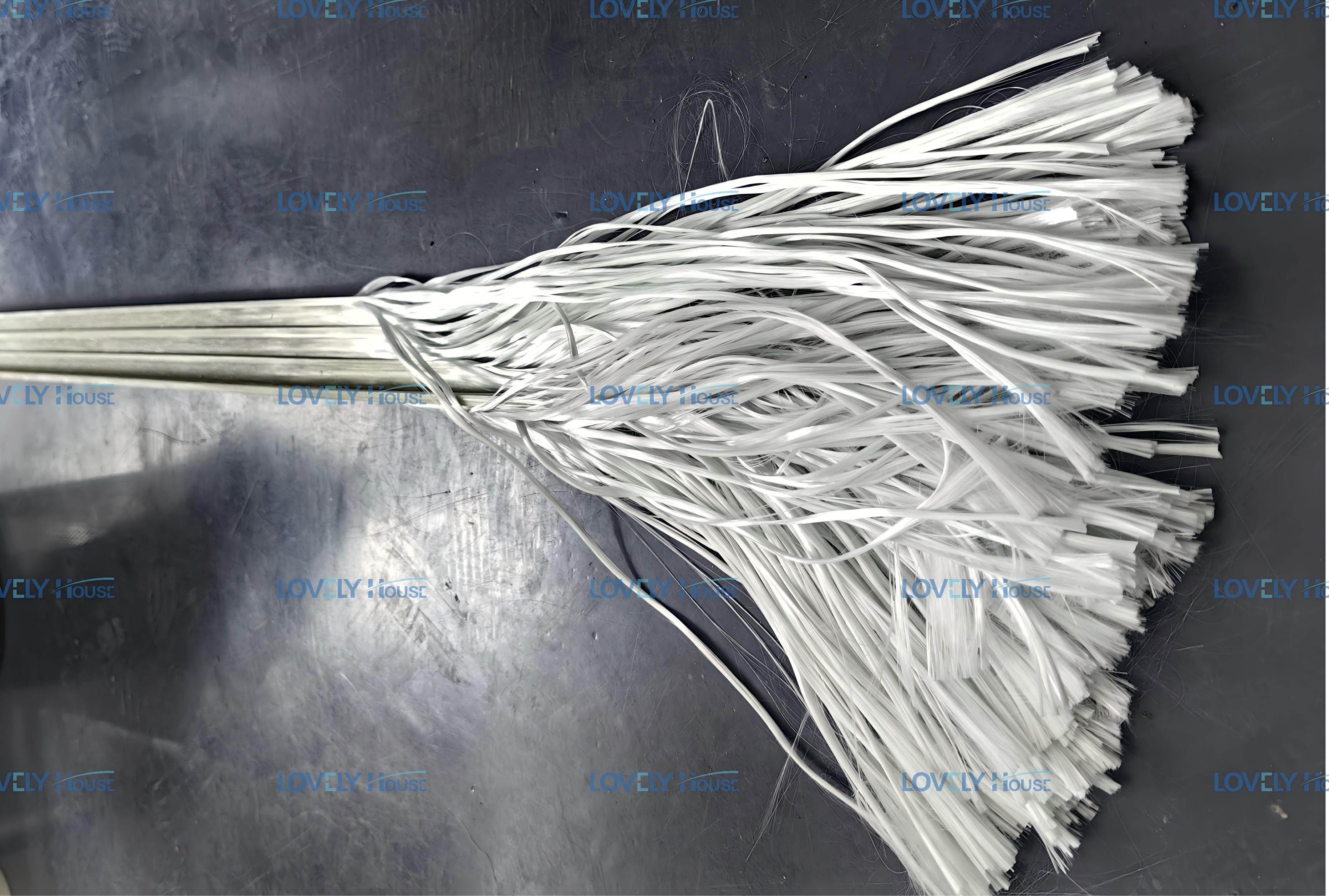
GRPU/FRPU products produced by mature low-pressure pultrusion process can achieve a fiber volume content of 60%-90%. The internal fiber distribution is uniform, the mechanical properties are stable and consistent, with low brittleness and strong impact resistance. It can perfectly meet the strict performance standards of GRPU/FRPU profiles for passive house energy-saving windows, wind turbine edge protection parts. The process can also accurately control the curing temperature curve to avoid common defects such as internal foaming and residual stress of GRPU/FRPU parts.
Although high-pressure pultrusion can reduce the porosity of a small number of thick-walled special profiles, it is easy to cause problems such as uneven curing of polyurethane resin and accelerated mold wear in conventional GRPU/FRPU mass production. The actual reject rate is significantly higher than that of the low-pressure pultrusion route, and the performance consistency of batch products is difficult to guarantee.
4. Equipment Investment and Operation Threshold
GRPU/FRPU low-pressure pultrusion has excellent equipment compatibility. It can be adapted to most of the pultrusion equipment on the market without large-scale transformation. The system assembly and debugging cycle is short, and the later daily maintenance is simple, which can effectively control the comprehensive production cost of GRPU/FRPU parts.
GRPU/FRPU high-pressure pultrusion needs to be equipped with a full set of special configurations such as pressure-resistant sealed molds, high-power booster pumps, and real-time pressure monitoring systems. The one-time equipment investment is several times that of the low-pressure scheme, and professional technicians are required to maintain the pressure system for a long time, which has a high operation threshold for small and medium-sized manufacturing enterprises.
Which GRPU/FRPU Pultrusion Process Is More Suitable for Your Project?
At present, the mainstream GRPU/FRPU large-scale production lines in the global market all adopt the low-pressure pultrusion process. It has been verified by a large number of actual cases that it can give full play to the performance advantages of glass fiber reinforced polyurethane, and take into account the dual core demands of high efficiency and low cost. The GRPU/FRPU high-pressure pultrusion process is only suitable for a small number of special scenarios, such as customized production of extra-thick GRPU/FRPU profiles with special modified polyurethane as the matrix.
If you want to get more practical GRPU pultrusion process parameters, industry application cases and technical optimization solutions, you can follow our subsequent updates to obtain the latest industry dry content.